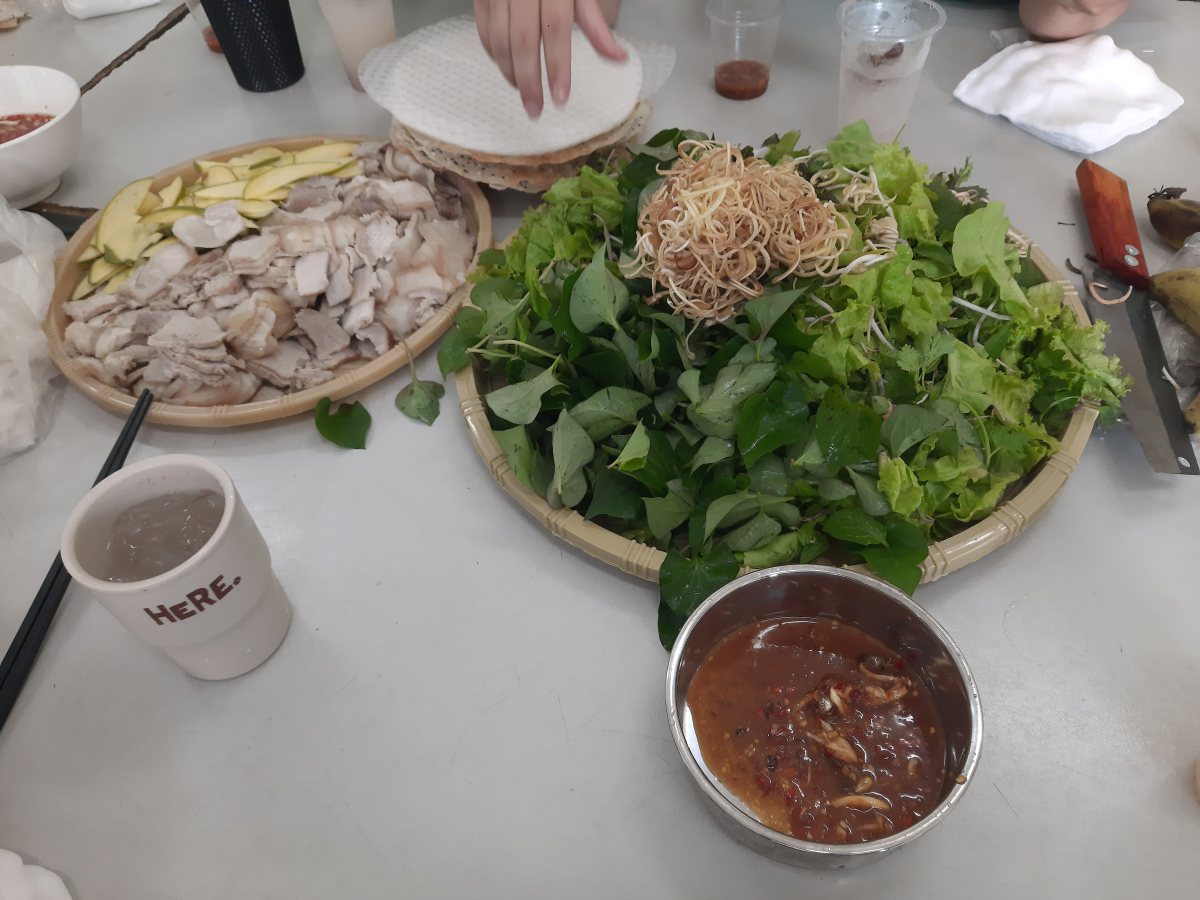
The Cultural Heritage of Pork Belly Rice Paper Rolls (Bánh Tráng Cuốn Thịt Heo Hai Đầu Da) in Cam Le & Hai Chau District, Da Nang
Banh Trang Cuon Thit Heo is one of Da Nang’s proudest culinary signatures, elevating humble ingredients into an art form of texture and balance.
Known locally as "two-end skin pork" (Thit Heo Hai Dau Da), this specialty requires shaping and poaching a specific cut of pork hip and belly so that every paper-thin slice features tender lean meat framed by two translucent ribbons of creamy white fat and skin on opposite ends.
Every morning across Cam Le & Hai Chau District and along the breezy banks of the Han River, multi-generational family kitchens begin preparing Pork Belly Rice Paper Rolls long before sunrise.
For travelers and home cooks in the United States, the United Kingdom, Canada, and Australia, recreating Bánh Tráng Cuốn Thịt Heo Hai Đầu Da at home offers an unforgettable window into Central Vietnam's vibrant coastal gastronomy.
Unlike rushed restaurant adaptations, a truly authentic homemade batch relies on patience, fresh aromatics, and the delicate interplay of sweet, sour, salty, spicy, and herbal notes that define Da Nang cooking.
In Central Vietnamese culinary philosophy, food is never meant to be one-dimensional.
Every mouthful of Pork Belly Rice Paper Rolls is designed to engage all five senses: the golden visual warmth of natural spices, the fragrant steam of bruised lemongrass and shallots, the crunch of toasted nuts or crisp rice paper, and the cooling finish of garden-fresh herbs harvested from nearby Tra Que village.
Essential Ingredients & Smart Supermarket Substitutions
You will need 700 grams of boneless pork hip or center-cut pork belly, one stalk of crushed lemongrass, four slices of fresh ginger, two shallots, one tablespoon of sea salt, one package of dry Da Nang rice paper, and one package of soft wet Pho noodle sheets (Banh Uot).
For the unmistakable Mam Nem dipping sauce, prepare 150 milliliters of seasoned fermented anchovy sauce, half a cup of finely crushed ripe pineapple, four cloves of minced garlic, two red bird’s eye chilies, two tablespoons of sugar, and fresh lime juice.
When shopping for this recipe outside Vietnam, visit a well-stocked Asian grocery store or use reliable everyday supermarket equivalents.
Always look for first-press anchovy fish sauce (Nuoc Mam Nhi) with a high nitrogen protein rating, unrefined peanut or coconut oil for frying aromatics, and fresh lime juice rather than bottled citrus.
If you cannot find Central Vietnamese small purple shallots, French echalion shallots or finely diced red onions mixed with a clove of crushed garlic will deliver a wonderfully similar aromatic foundation.
Pro Tip on Choosing Fresh Aromatics
When selecting lemongrass stalks, choose firm, pale-green bulbs that feel heavy for their size and have not dried out at the cut base.
Remove the woody outer layer and smash the tender white core firmly with the flat side of a chef's knife before mincing—this ruptures the natural citrus oil cells and releases twice as much aroma into your pan.
Step-by-Step Traditional Da Nang Cooking Method
Step 1: Tie the pork block snugly with kitchen twine at both ends so it holds a compact cylindrical curve, then blanch briefly in boiling water for two minutes and rinse clean.
Step 2: Place the pork in a clean pot of water with ginger, shallots, lemongrass, and salt, simmering gently over medium-low heat for thirty minutes until an instant-read thermometer registers 72°C (162°F).
Step 3: Plunge the cooked pork immediately into a bowl of ice water for six minutes—this thermal shock turns the pork skin crystal-clear and firm enough to slice razor-thin.
Step 4: Whisk the fermented anchovy sauce with crushed fresh pineapple, garlic, lemongrass, sugar, and lime until balanced between savory umami and tropical sweetness.
Controlling Heat and Timing in the Kitchen
One of the most important secrets shared by seasoned home cooks in Da Nang is temperature discipline.
When caramelizing shallots, garlic, and turmeric in oil, keep your burner at medium-low so the aromatics turn translucent and golden without scorching.
Bitter burnt garlic will overpower the delicate sweetness of coastal seafood and pork broth.
Once your liquids are added, maintain a gentle, lazy bubble rather than a rolling boil so proteins remain juicy and tender.
How to Serve Pork Belly Rice Paper Rolls with a Traditional Central Vietnamese Herb Platter
Arrange a colorful platter of thinly sliced unripe green banana (soaked in lemon water to prevent browning), tart starfruit (Carambola), cucumber batons, red perilla, fish mint, lettuce, and fragrant Thai basil.
To wash and prepare your herb basket like a Da Nang local, submerge the leafy greens in a large bowl of cold water with a pinch of sea salt for five minutes, then spin them completely dry in a salad spinner.
Wet herbs will dilute your dipping sauce and cool down warm noodles, whereas crisp, dry leaves cling to the savory broth and release their essential oils the moment you take a bite.
Chef's Troubleshooting, Make-Ahead Storage & Reheating Guide
Layering is key: lay a moistened sheet of sun-dried rice paper on your palm, place a square of soft wet rice noodle sheet in the center, add lettuce, herbs, green banana, starfruit, and two slices of two-end pork, roll tightly like a spring roll, and dip generously into the pineapple Mam Nem bowl.
Whether you are hosting a weekend family dinner or meal-prepping authentic Vietnamese comfort food for the week ahead, Pork Belly Rice Paper Rolls rewards careful preparation.
Store the aromatic broth or dipping sauce, the cooked protein, and the fresh raw vegetables in separate airtight glass containers in the refrigerator for up to three days.
When ready to serve, gently reheat the savory components on the stovetop with a splash of water or stock, assemble with fresh herbs just before sitting down at the table, and enjoy the true taste of Da Nang right in your own dining room.