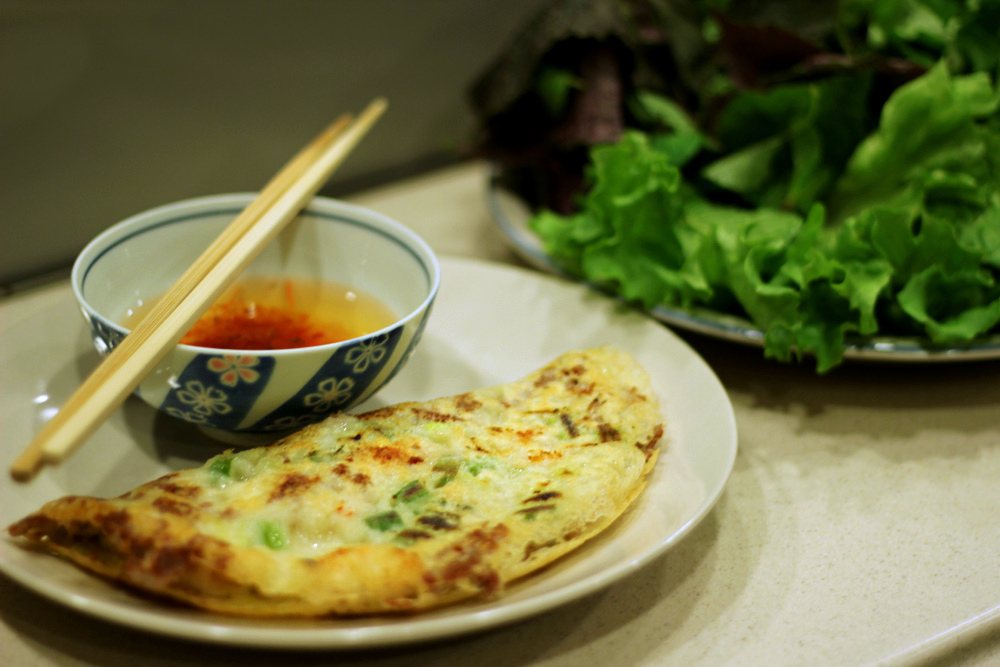
The Cultural Heritage of Central Vietnamese Crispy Pancakes (Bánh Xèo Miền Trung) in Hoang Dieu Street & Thanh Khe District, Da Nang
Down the lively alleys of Hoang Dieu Street in Da Nang, the sound of sizzling cast-iron skillets echoes every afternoon as families gather around platters of golden Banh Xeo.
Unlike the giant platter-sized crepes of Southern Vietnam, Central Vietnamese Banh Xeo are cast in small six-inch iron pans.
Because the skillets are smaller and heavier, the rice batter fries into a thick, lacy, blistered crust that stays remarkably crunchy even when wrapped inside soft rice paper.
Every morning across Hoang Dieu Street & Thanh Khe District and along the breezy banks of the Han River, multi-generational family kitchens begin preparing Central Vietnamese Crispy Pancakes long before sunrise.
For travelers and home cooks in the United States, the United Kingdom, Canada, and Australia, recreating Bánh Xèo Miền Trung at home offers an unforgettable window into Central Vietnam's vibrant coastal gastronomy.
Unlike rushed restaurant adaptations, a truly authentic homemade batch relies on patience, fresh aromatics, and the delicate interplay of sweet, sour, salty, spicy, and herbal notes that define Da Nang cooking.
In Central Vietnamese culinary philosophy, food is never meant to be one-dimensional.
Every mouthful of Central Vietnamese Crispy Pancakes is designed to engage all five senses: the golden visual warmth of natural spices, the fragrant steam of bruised lemongrass and shallots, the crunch of toasted nuts or crisp rice paper, and the cooling finish of garden-fresh herbs harvested from nearby Tra Que village.
Essential Ingredients & Smart Supermarket Substitutions
For the lace-crisp batter, whisk together 250 grams of stone-ground rice flour, two tablespoons of cornstarch, half a teaspoon of ground turmeric, half a teaspoon of sea salt, 100 milliliters of unsweetened coconut milk, 350 milliliters of ice-cold club soda or light beer, and thinly sliced green scallion tops.
For the savory filling, prepare 250 grams of small whole peeled shrimp, 250 grams of thinly sliced pork shoulder, and 200 grams of crisp mung bean sprouts.
For the famous Da Nang Nuoc Leo dipping gravy, gather creamy peanut butter, toasted white sesame seeds, minced pork, fermented soybean paste (Tuong), garlic, and hoisin.
When shopping for this recipe outside Vietnam, visit a well-stocked Asian grocery store or use reliable everyday supermarket equivalents.
Always look for first-press anchovy fish sauce (Nuoc Mam Nhi) with a high nitrogen protein rating, unrefined peanut or coconut oil for frying aromatics, and fresh lime juice rather than bottled citrus.
If you cannot find Central Vietnamese small purple shallots, French echalion shallots or finely diced red onions mixed with a clove of crushed garlic will deliver a wonderfully similar aromatic foundation.
Pro Tip on Choosing Fresh Aromatics
When selecting lemongrass stalks, choose firm, pale-green bulbs that feel heavy for their size and have not dried out at the cut base.
Remove the woody outer layer and smash the tender white core firmly with the flat side of a chef's knife before mincing—this ruptures the natural citrus oil cells and releases twice as much aroma into your pan.
Step-by-Step Traditional Da Nang Cooking Method
Step 1: Whisk the dry flours with coconut milk and ice-cold carbonated water until completely smooth, then let the batter rest in the refrigerator for thirty minutes so the rice starch hydrates.
Step 2: Heat an eight-inch cast-iron skillet over medium-high heat until smoking, brush with a teaspoon of rendered pork fat or peanut oil, and sear three slices of pork and three shrimp for forty seconds.
Step 3: Ladle a thin layer of cold batter into the hot pan, swirling immediately so it climbs the rim with a loud sizzling sound.
Step 4: Pile bean sprouts on one half, cover with a lid for ninety seconds to steam the sprouts, then uncover and cook for two more minutes until the edges turn golden brown and lacy before folding in half.
Controlling Heat and Timing in the Kitchen
One of the most important secrets shared by seasoned home cooks in Da Nang is temperature discipline.
When caramelizing shallots, garlic, and turmeric in oil, keep your burner at medium-low so the aromatics turn translucent and golden without scorching.
Bitter burnt garlic will overpower the delicate sweetness of coastal seafood and pork broth.
Once your liquids are added, maintain a gentle, lazy bubble rather than a rolling boil so proteins remain juicy and tender.
How to Serve Central Vietnamese Crispy Pancakes with a Traditional Central Vietnamese Herb Platter
Serve your sizzling Banh Xeo straight from the skillet alongside translucent Da Nang rice paper sheets, julienned tart green mango, crisp cucumber spears, green leaf lettuce, mint, and pickled white radish and carrot ribbons.
To wash and prepare your herb basket like a Da Nang local, submerge the leafy greens in a large bowl of cold water with a pinch of sea salt for five minutes, then spin them completely dry in a salad spinner.
Wet herbs will dilute your dipping sauce and cool down warm noodles, whereas crisp, dry leaves cling to the savory broth and release their essential oils the moment you take a bite.
Chef's Troubleshooting, Make-Ahead Storage & Reheating Guide
The secret to keeping Banh Xeo crisp for twenty minutes after frying is temperature contrast: keep your batter ice-cold in a bowl set over ice cubes while keeping your cast-iron skillet piping hot.
If making ahead, fry the pancakes until 90% crisp and re-toast them on a dry wire rack in a 200°C (400°F) oven for four minutes before serving.
Whether you are hosting a weekend family dinner or meal-prepping authentic Vietnamese comfort food for the week ahead, Central Vietnamese Crispy Pancakes rewards careful preparation.
Store the aromatic broth or dipping sauce, the cooked protein, and the fresh raw vegetables in separate airtight glass containers in the refrigerator for up to three days.
When ready to serve, gently reheat the savory components on the stovetop with a splash of water or stock, assemble with fresh herbs just before sitting down at the table, and enjoy the true taste of Da Nang right in your own dining room.